
27th NELTA International Conference 2023
Keynote Speakers

Prof. Dr. Tammy Gregersen
American University of Sharjah, UAE
Tammy Gregersen, a TESOL professor at the American University of Sharjah in the UAE, earned her MA in Education and PhD in Linguistics in Chile. But, first and foremost, she is a teacher. She co-wrote the Oxford title, Teacher Wellbeing (2020), with Sarah Mercer and the Routledge Handbook of the Psychology of Language Learning and Teaching. They also co-wrote Capitalizing on Language Learner Individuality and Optimizing Language Learners' Nonverbal Communication in the Language Classroom with Peter MacIntyre. She is also a co-editor of Positive Psychology in SLA and Innovations in Language Teacher Education with Peter and Sarah.
Savor the Labor: Insights into Teacher Wellbeing
Abstract:
Although language teacher well-being is multidimensional, its components are dynamically interconnected, with all being required for personal and professional success. This presentation will look at how we can find balance in our minds, bodies, emotions, motivations, relationships, and workplaces now and in the future. The concepts and activities presented are research-based and practical, and will equip teachers to choose from a variety of mediations that are most aligned with their own individual circumstances at home and in the classroom.

Prof. Dr. Ram Ashish Giri
Monash University, Melbourne, Australia
Ram Ashish Giri, PhD, is an academic (Teaching and Research) at Monash College/Monash University in Melbourne, Australia, where he has taught English and degree programs since 2009. Professor Giri received his education in Nepal, the United States, and Australia. Following his Master of Education in English linguistics from Tribhuvan University in Nepal, he attended Columbia University in New York for an Ed.M. in Applied Linguistics through the Fulbright Scholarship program, and then Monash University in Melbourne for his Ph.D. through the Australian government's (IPRS) scholarship program.
Innovation in Teacher Education: Introducing Enhancement Approach to Teacher Development
Abstract:
Most teacher development models practiced in low-income and middle-income countries (LMICs) are mostly) are expert-driven, with teachers looking for prescriptive ideas to implement to bring some newness to their classrooms. These deficit models attribute a teacher's lack of success or achievement in student learning to a personal lack of effort or deficiency. They tend to focus on individual problems and try to find specific solutions for them. In other words, they focus on what teachers lack and thus need to know to be effective teachers. Teachers are frequently blamed (or blame themselves) for not doing enough to affect changes in student learning and, thus, student achievement.
Rather than starting from a deficit position, the 'Enhancement approach' to teacher development involves identifying, understanding, building on, and disseminating 'good practices' as locally defined. The term 'enhancement approach,' as opposed to a 'deficit approach,' is based on the successful practices of individual teachers and emphasizes strengths to empower them. It is assumed that teachers have the abilities and resources for self-development. Thus, the strengths-based approach seeks to build on the strengths or successes of teacher communities rather than providing solutions to their problems. Based on the findings of a binational project, this session highlights the theoretical perspectives, practical processes, and features of the enhancement approach to demonstrate why this model is an innovative practice for teacher development in developing countries such as Nepal.
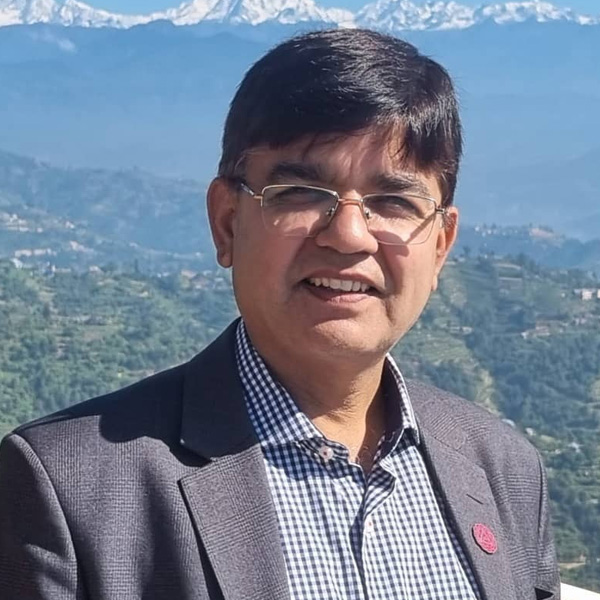
Prof. Dr. Laxman Gnawali
Kathmandu University, Nepal
Dr. Laxman Gnawali, Senior Vice President of NELTA and Professor of English Education at Kathmandu University, directs EFL teacher education and trainer development programs in Nepal. He co-authors EFL textbooks, creates language development courses for teachers, and frequently travels to national and international ELT conferences to deliver sessions. He motivates and supports teachers' professional development through publication, conference attendance, and network building.
Reflecting on Language Teacher Associations and their Engagement in Pedagogical Innovations
Abstract:
The late 1960s movement to establish language teacher associations (LTAs) aimed at bringing together teachers and other professionals from various backgrounds to exchange ideas, share resources, and support one another in their professional development. They grew in membership over time as they provided various benefits to their members, such as access to professional development opportunities and networking events. Despite the proliferation of these associations and the increasing number of members' engagements, they received little visible attention in the research discourse until 2010. (Aubrey & Coombe 2010). However, research-based publications such as ELT Journal's special issue (2016) and the anthology edited by Elsheikh et al (2018) brought the existence of LTAs into the mainstream ELT discourse. They highlighted how LTAs are collaborating to carry out actions that benefit them. After more than fifty years, seeking evidence-based discourse on LTA innovations is possible. The findings of a study based on in-depth interviews with LTA leaders are presented in this talk. The presentation's main focus will be on how LTAs innovate and how these innovations are disseminated, as well as how the purpose of the LTAs' existence has changed.
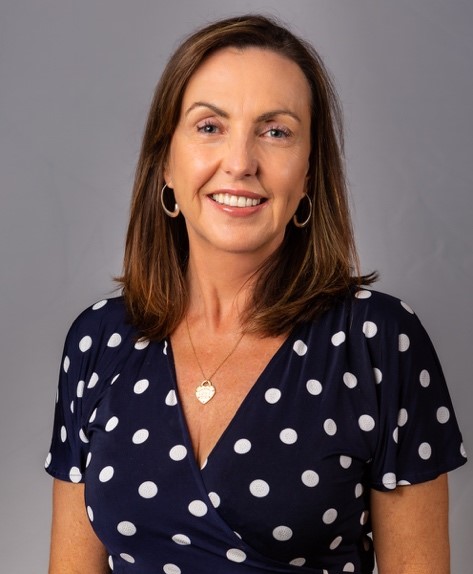
Prof. Dr. Sarah Prestridge
Griffith University, Queensland, Australia
Prof Sarah Prestridge's research has focused on conceptualizing what constitutes effective teaching in a digital world. Since completing her PhD in 2007, she has investigated the integration of digital technologies through the relationship between epistemological and pedagogical beliefs. She has identified the process of changing instructional practices to facilitate effective engagement with digital tools. Throughout her professional development research, she has investigated the tension between face-to-face, online, and self-generating professional learning, as well as how teachers learn online through social networks and the elements of student self-regulation when learning online.
Language Learning Online: Opportunities and Considerations for Engineering Student Engagement
Abstract:
Moving on from remote learning after the pandemic, this keynote looks at the role of online learning in language learning. Learning online is not the same as learning in a classroom. A teacher can see what students are thinking as they contribute to online chat conversations and post relevant content at any time in the online space. The online space allows students and teachers to interact in real time and collaborate and creates a 'place' with more student-driven 'choice' for interactivity. Teaching online must be distinct from classroom instruction. Online teaching focuses on designing student engagement with content, with one another, and within digital tools or spaces. What implications does this have for language teaching and learning? What are the opportunities that an online environment brings? And what are the challenges that teachers need to address to ensure that students benefit from learning online? These questions will be explored in this keynote presentation.
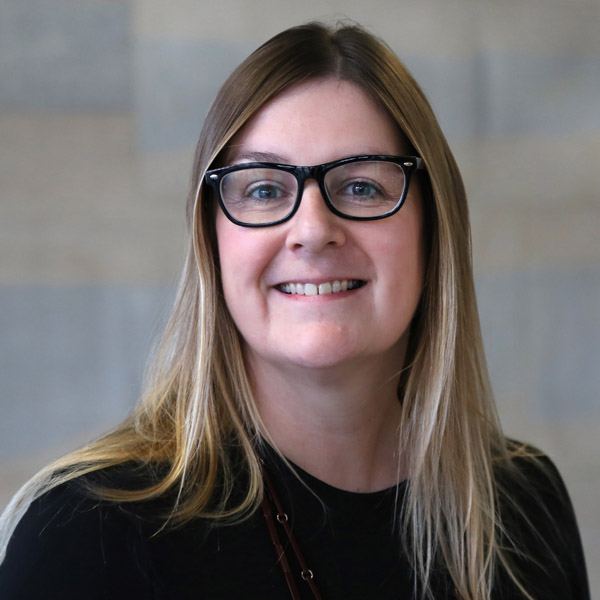
Dr. Tracey Costley
Head of Department for Language and Linguistics at the University of Essex, United Kingdom
Dr. Tracey Costley is the Head of the Language and Linguistics Department at the University of Essex. The United Kingdom. Tracey primarily contributes to the Department's MA TESOL and BA TEFL courses. Her modules cover Theory and Methods in ELT, English for Specific Purposes, Multilingualism and Translanguaging, and Multilingualism and Translanguaging. Her research primarily uses ethnographic approaches to investigate and comprehend language learning and teaching, particularly emphasizing how teachers and students collaborate to create and construct meaning.
Reflections on Multilingualism: Translanguaging and Professional Development in TESOL
Abstract:
Translanguaging, Plurilingualism, CLIL, and Language Supportive Pedagogies are some of the concepts, approaches and practices that have entered our discourse in recent years, reflecting what May (2014) described as the ‘multilingual turn’ within TESOL and applied linguistics. These terms represent important developments in the field and reflect changes in thinking about effective language learning and teaching. I begin this talk by reflecting on some of these changes and how they are shaping current thinking and classroom practices, specifically in relation to the teaching of English. I then move on to explore some of the implications these changing practices have for practitioners and those involved in planning, delivering, and supporting language learning and teaching. I draw on data and preliminary findings from a project looking at translanguaging practices in classrooms in Botswana, Tanzania and Zambia, as well as other contexts, to give examples of how practitioners understand and use translanguaging in their classrooms and what challenges they experience in the process. I end this talk with some practical suggestions for how teacher training and development within TESOL could be improved to better support practitioners working with these approaches in multilingual classrooms.

Dr. Eleni Pappamihiel
Professor, University of North Carolina Wilmington, USA
Dr. Eleni Pappamihiel is a University of North Carolina Wilmington professor. She earned her master's degree in education from the University of North Carolina Charlotte and her doctorate from the University of Texas at Austin. Her doctorate is in Curriculum and Instruction, with concentrations in Teaching English as a Second Language and Bilingual Education. Her doctoral research examined second language anxiety in depth. She has since continued investigating teacher beliefs and affective factors influencing language learning. She also specializes in teacher preparation and has numerous publications to assist preservice and in-service teachers in improving academic outcomes for English language learners in US schools.
Integrating Student Voice into Alternative Assessment
Abstract:
For decades now, teachers have been focusing more and more on differentiated instruction in the classroom. We have been looking at ways to make instruction more closely meet students' needs instead of being forced to adapt to a standard method of instruction. However, assessment has not so closely followed this model. While classroom instruction has become more and more innovative, assessment has stagnated, trapped in the traditional methods that supposedly prepare students for standardized tests of English. While we cannot diminish the importance that these tests have on the lives of our students, we can implement alternative methods of assessment that increase motivation to use English in authentic ways and provide high-quality data for teachers to use to inform instruction. In this talk, I will focus on two types of interactive alternative assessments, the Brown Bag exam and a scaffolded pair assessment. Both assessments integrate individual and pair accountability and push students to think beyond superficial levels of understanding.
Conference Details
Location: D.A.V. Sushil Kedia Vishwa Bharati School, Jawalakhel, Lalitpur, Nepal
From : 17th February, 2023
7:00 AM
To : 19th February, 2023
5:20 PM
Other details
Latest Conference
|
31st NELTA International Conference 2027
19th February, 2027 21st February, 2027 |
|
30th NELTA International Conference 2026
30th January, 2026 31st January, 2026 |
|
29th NELTA International Conference 2025
27th February, 2025 1st March, 2025 |
|
28th NELTA International Conference 2024
17th February, 2024 19th February, 2024 |
|
27th NELTA International Conference 2023
17th February, 2023 19th February, 2023 |
|
NELTA International Virtual Think-in-2022
11th March, 2022 13th March, 2022 |
|
NELTA INTERNATIONAL VIRTUAL THINK-IN-2020
10th September, 2020 10th September, 2020 |
|
NELTA National Conference 2019
2nd March, 2019 3rd March, 2019 |
|
23rd International Conference
15th February, 2018 17th February, 2018 |
|
22nd International Conference
24th February, 2017 26th February, 2017 |